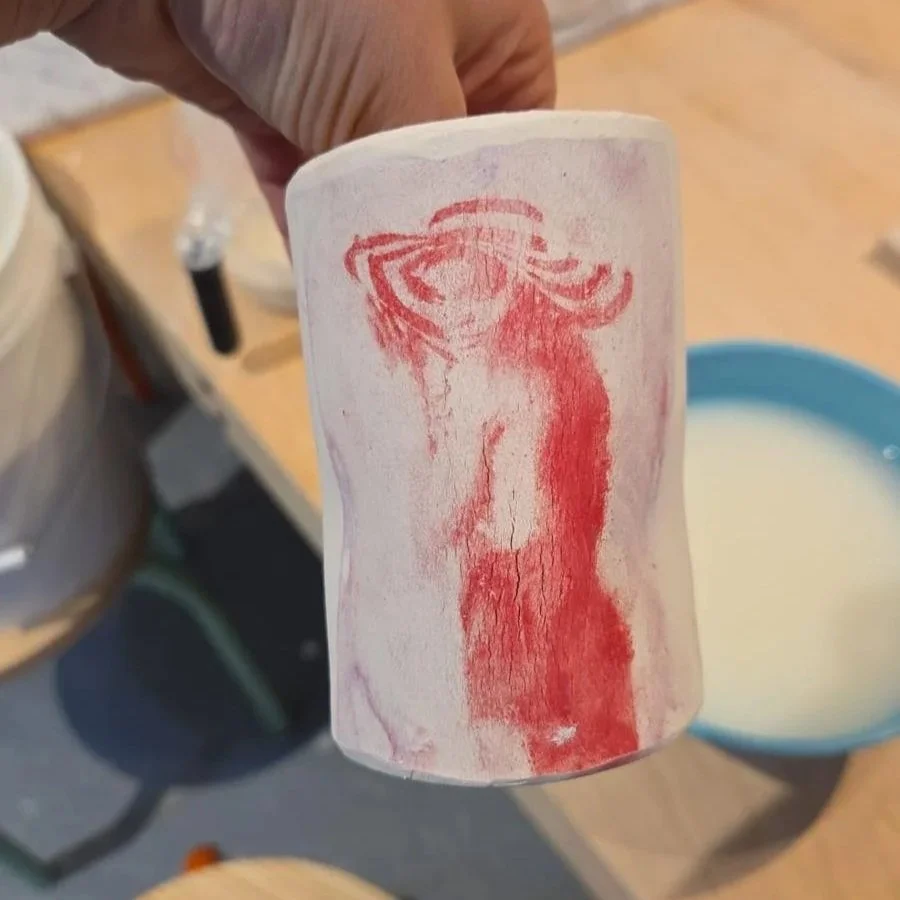
Xerolithography on Clay
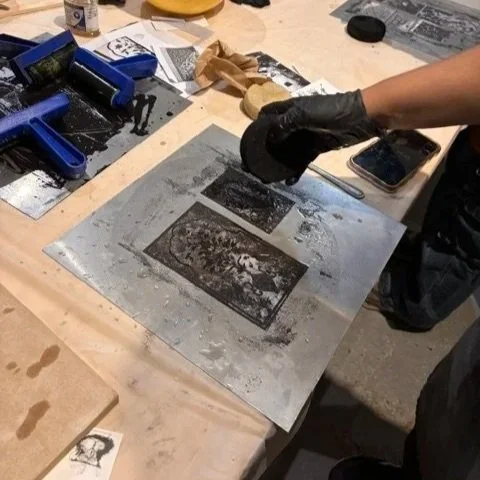
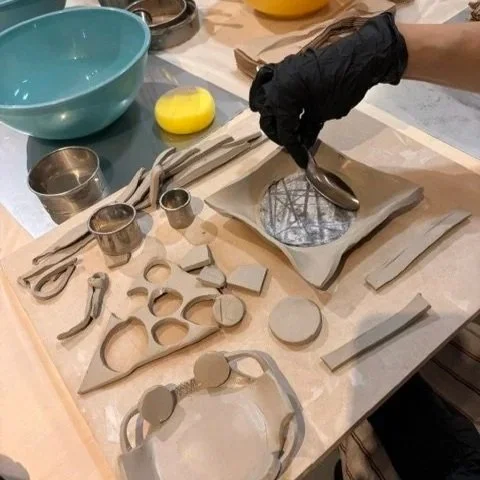
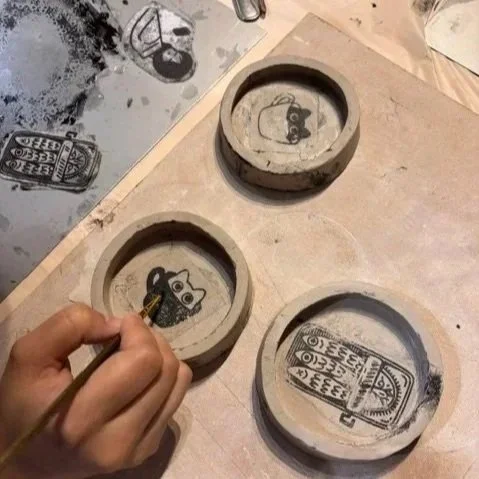
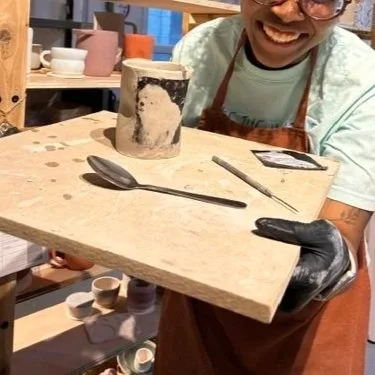
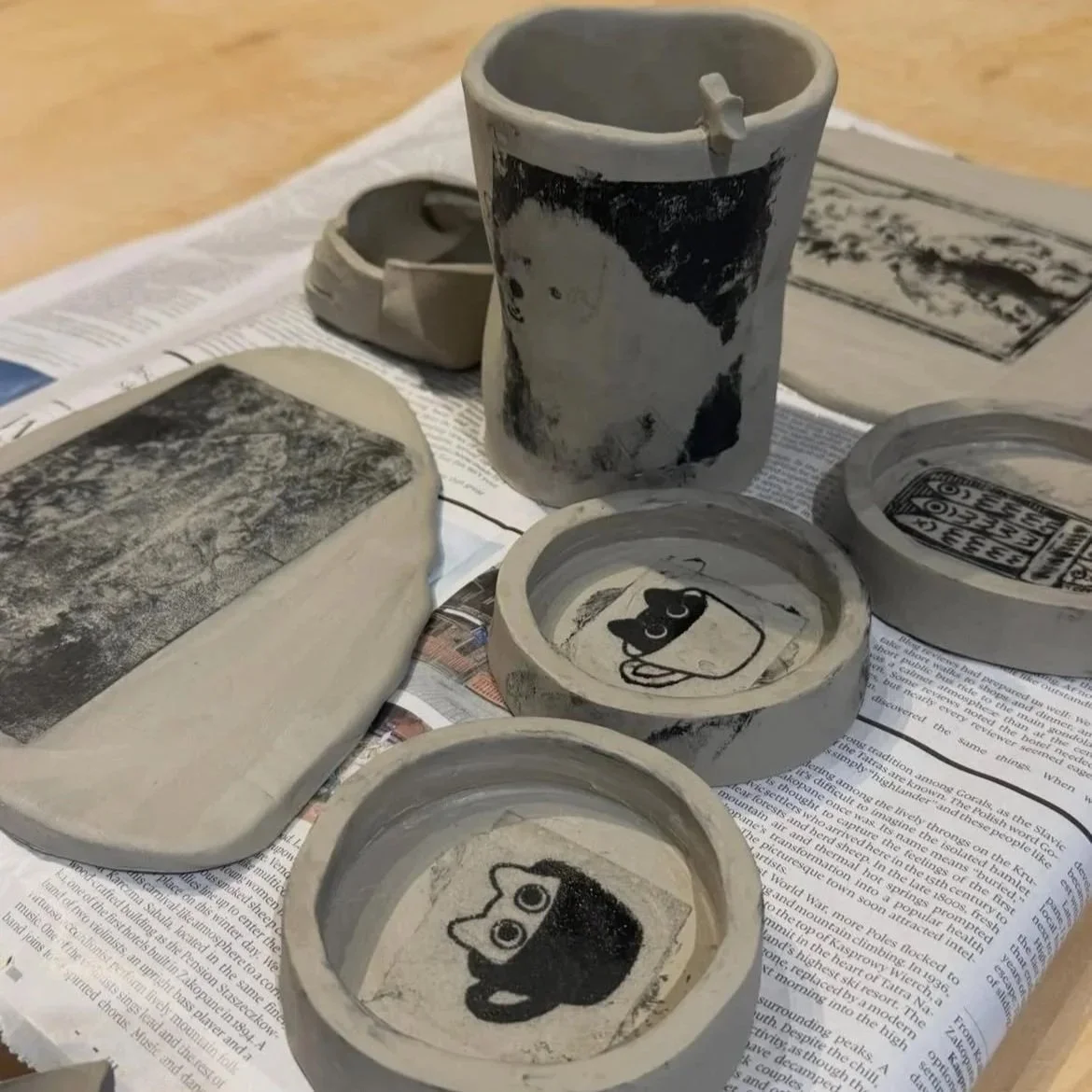
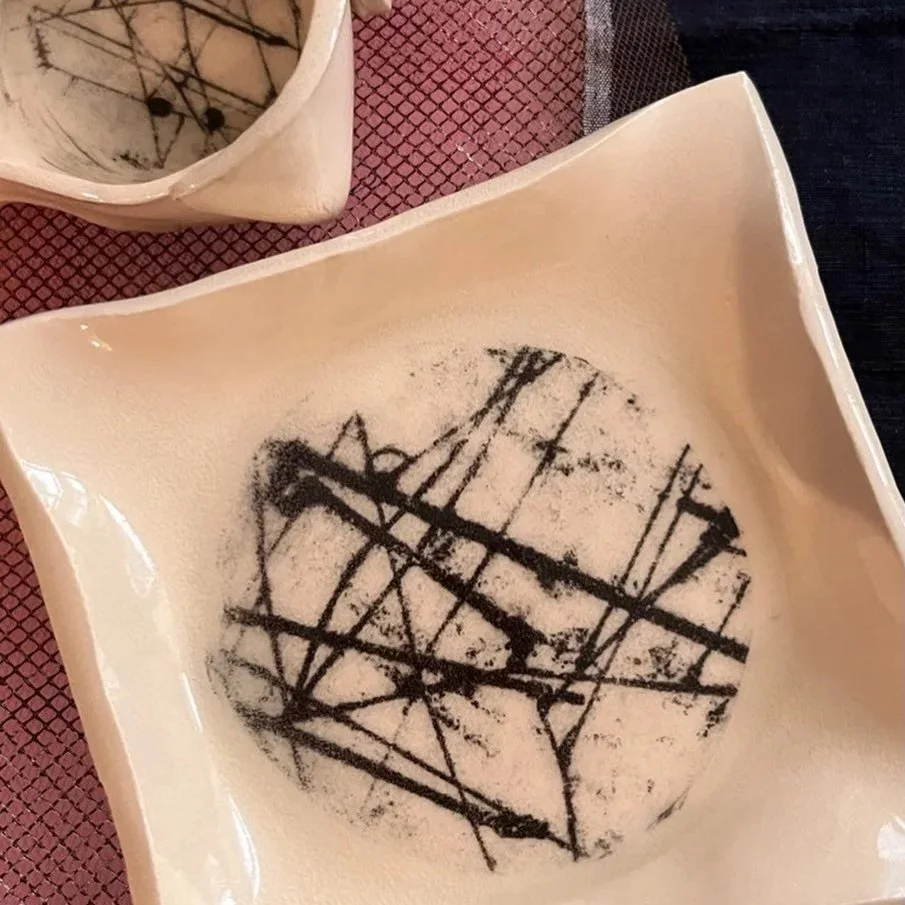
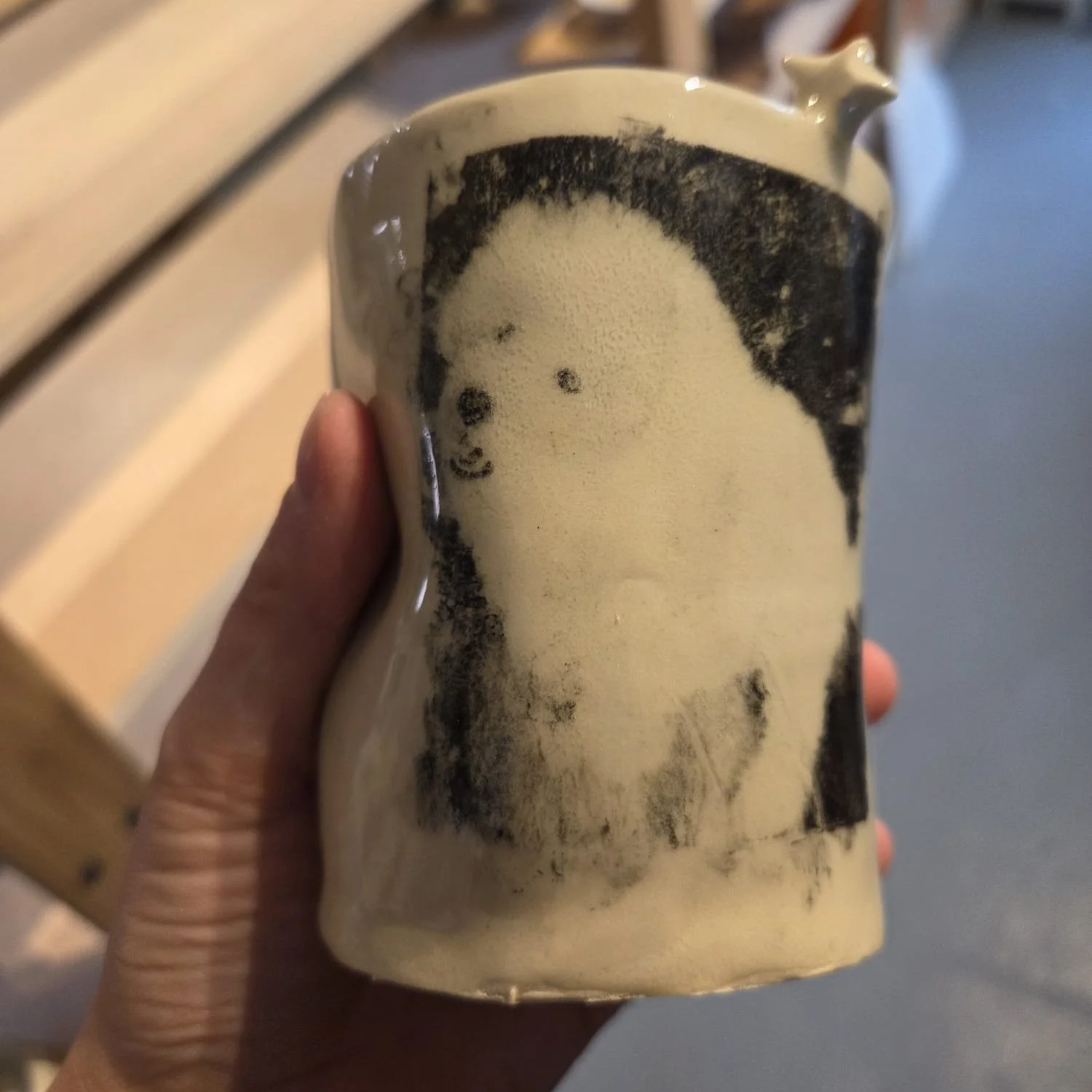
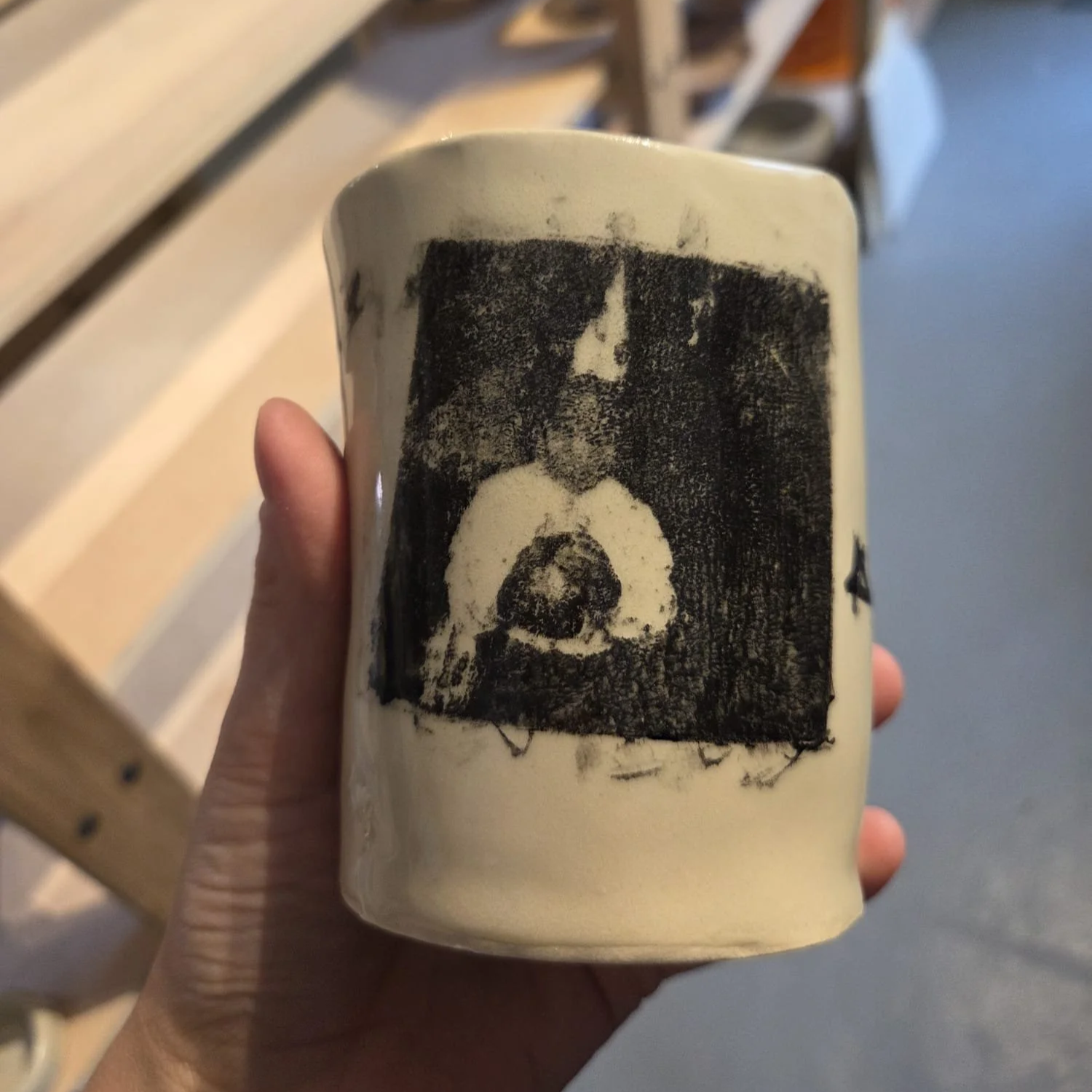
In this workshop, participants learn to make slab mugs, tiles, or small dishes, and transfer their printed images of choice onto their creations using the simple and fun process of xerolithography.
Xerolithography is a printing process that makes use of a simple chemistry principle: mutual repulsion of oil and water(since water is polar and oil is non-polar.)
Traditionally, Lithography involves drawing with a hydrophobic (water repellent) oil-based medium on a limestone plate (hence the Greek prefix “litho-,” meaning “stone”). The stone plate is then treated with gum arabic and water to make the surface hydrophilic (water-attracting) and moist. An oil-based ink is then applied to the stone -- the ink sticks to the drawing, and repels from the moist areas.
Our modern laser printers and photocopiers employ a process called “Xerography” that involves a plastic-based, powdered toner, fused to the paper with heat (no liquid chemicals, hence its name deriving from the Greek “xero,” meaning “dry).
Plastic, like oil, is non-polar, and hydrophobic, meaning it will attract oil-based ink and repel water. We can make the paper even more hydrophilic by saturating it with gum arabic, and use it to replicate the lithographic process on clay using an oil-and-stain-based ink. Thus, we have xerolithography on clay!
PotteryLab, 14th June 2026 (Toronto, ON)